

Get a Quote

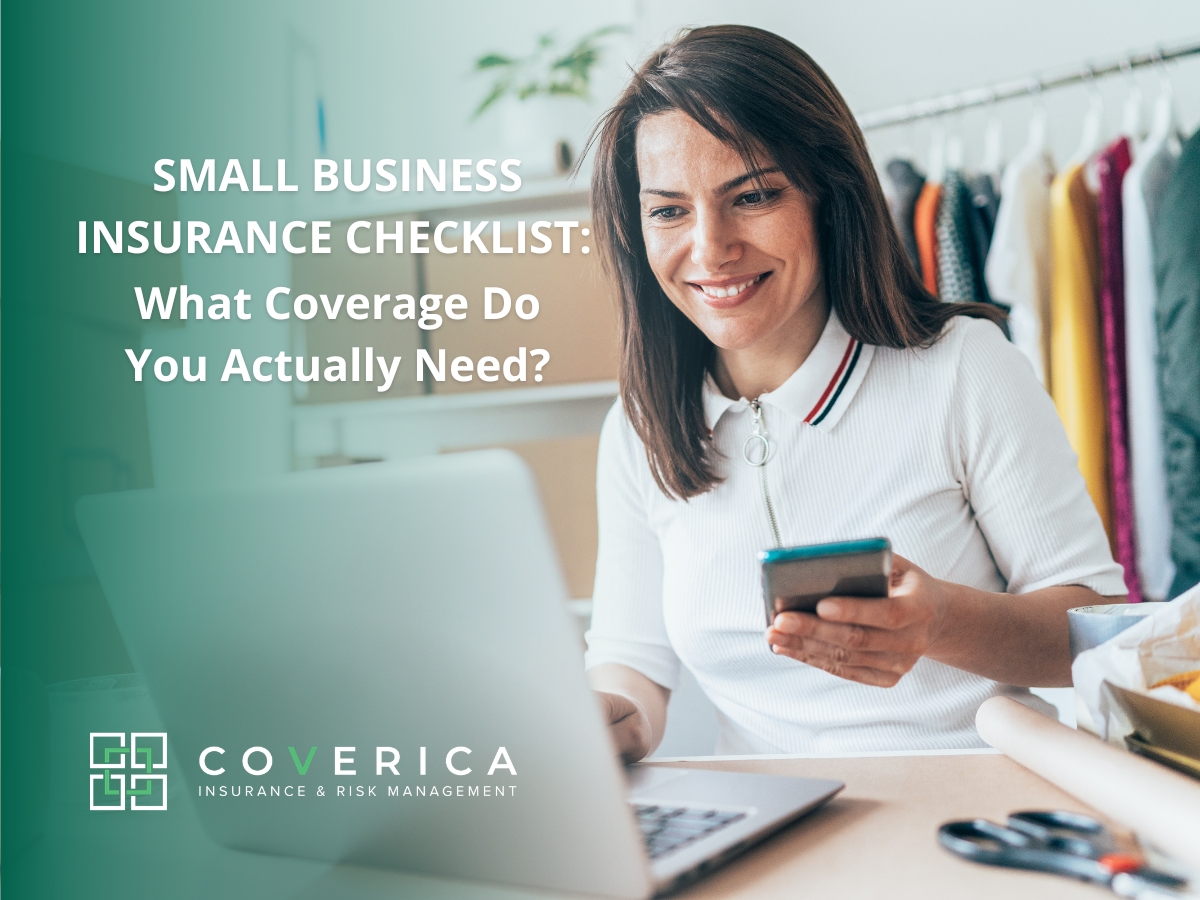

Starting a business requires courage. You have to believe in your idea enough to invest your time, money, and energy into making it real. But along with that excitement comes a healthy dose of responsibility. You have assets to protect, a reputation to maintain, and perhaps a team depending on you for their livelihood.
When you look at the landscape of commercial insurance, it is easy to feel overwhelmed. There are dozens of policy types, endless acronyms, and a lot of fine print. It often leaves business owners asking one simple question: "What do I actually need?"
You don’t need every policy under the sun. You need a tailored strategy that covers your specific risks without draining your budget on unnecessary premiums. This guide cuts through the noise. We have compiled a checklist of the most essential insurance coverages for small businesses. We will walk through what they are, why they matter, and how to determine if they belong in your portfolio.
If you only purchase one policy, this is usually it. Think of General Liability (CGL) as the foundation of your risk management strategy. It is designed to cover the most common accidents that can happen when you interact with the public, clients, or vendors.
Almost every business needs General Liability. Whether you run a coffee shop, a consulting firm, or a construction crew, you interact with the world. If you rent office space, your landlord will likely require you to have this coverage before handing over the keys. It is the first line of defense against lawsuits that could otherwise bankrupt a small operation.
Your business likely owns physical assets. These are the tangible things you use to generate revenue. Commercial Property Insurance is there to repair or replace these items if they are damaged by fire, theft, vandalism, or certain weather events.
If you have a physical location, even if it is a home office, or if you own business equipment, you need this protection. A common misconception is that a personal homeowner’s policy will cover business equipment used at home. Often, it does not.
When evaluating this coverage, pay attention to how your assets are valued. You can typically choose between Replacement Cost (brand new equivalent) or Actual Cash Value (depreciated value). While Replacement Cost might have a slightly higher premium, it ensures you can actually afford to buy new equipment if disaster strikes.
If you have employees, you enter a new tier of responsibility. You are responsible for providing a safe working environment. However, accidents happen even in the safest workplaces. Workers’ Compensation is a "grand bargain" system: it provides guaranteed benefits to injured workers, and in exchange, employees generally cannot sue their employers for those injuries.
This is rarely optional. In most states, if you have even one employee, Workers’ Compensation is legally mandatory. The definition of "employee" can sometimes be strict, so do not assume part-time staff or family members are exempt without checking your local state laws. Failing to carry this coverage can lead to severe fines and penalties, not to mention leaving your business vulnerable to massive lawsuits.
General Liability covers physical mishaps. But what if your mistake causes a client to lose money? If you provide advice, expertise, or professional services, you face a different set of risks. This is where Professional Liability, often called Errors & Omissions (E&O), comes into play.
This is essential for service-based businesses. Accountants, consultants, architects, real estate agents, and technology providers are prime candidates.
For example, imagine a web developer builds an e-commerce site that crashes on Black Friday, causing the client to lose thousands in sales. The client could sue the developer for those lost revenues. A General Liability policy would likely deny this claim because no property was physically damaged and no one was hurt. Professional Liability is designed exactly for this scenario.
Disasters do more than just break things; they stop you from working. If a fire damages your bakery, your Property Insurance pays to fix the oven and the walls. But what about the revenue you lose during the three months you are closed for repairs? How do you pay your rent, utilities, and key staff during that downtime?
This coverage is often bundled with Commercial Property insurance in a package known as a Business Owner’s Policy (BOP). It is vital for businesses that rely on a physical location to generate income. Retail stores, manufacturers, and restaurants are particularly vulnerable. If your business can easily operate remotely with just a laptop, this might be less critical, but for many, it is the difference between surviving a disaster and closing forever.
Having a checklist is a great start, but insurance is not "one size fits all." To determine which of the above coverages are critical for your specific situation, you need to look at three factors: Industry, Size, and Risk Profile.
Different industries face different threats.
Ask yourself: "If X happened, could I pay for it out of pocket?"
If a client sues you for $50,000, can your business cash flow handle that? If a fire destroys $20,000 of inventory, is that a minor bump or a fatal blow? Insurance is essentially transferring the risks you cannot afford to handle yourself.
There is no need to guess. The goal is to build a safety net that lets you focus on growth, rather than worrying about "what ifs."
Start by gathering your current policy documents (if you have them) and your latest financial statements. Look at your asset list and your payroll. Then, speak with a qualified broker or agent. A good conversation with an expert can help you spot gaps you didn't know existed and, just as importantly, help you avoid paying for coverage you don't actually need.
Your business is your hard work in action. Protecting it with the right checklist is one of the smartest investments you can make.
.svg)
.png)